
Stop the Jumping:
Help your dog greet calmly
learn why dogs jump, how to stop it with training and create safer, stress-free hellos for family, guests and pets alike.

Why do dogs jump and how should you respond?
Jumping is one of the most common, and maybe one of the most controversial, dog behaviors. To some, it’s a cute way that dogs show their excitement to see you. To others, it’s dangerous and impolite behavior.
How you want your dog to greet people is up to you, as long as everyone is safe and happy. But did you know that not all jumping comes from an overabundance of joy? Read on to see why dogs jump and how a professional trainer can help you know how to handle your dog’s exuberant greetings.
How Expert Trainers Teach Calm Greeting Habits
Good trainers focus on what they do want the dog to do, not just what they don’t want. When it comes to greetings, we use positive reinforcement to reward behaviors like keeping all four paws on the floor or other alternatives to jumping on people to say hello. We break this goal down into simple, achievable steps to reduce frustration for both you and your dog, making greetings a more enjoyable experience for everyone.

Why Dogs Jump and What It Means
Dogs jump for a variety of reasons. For some, it’s simply their way of expressing their enthusiasm to see you. Some dogs want to get closer to a person’s face or get attention, and jumping is how they’ve learned to do that. Other dogs jump because they are uncomfortable and actually asking for space and distance from the person. It can be really hard to know the difference!
A professional dog trainer will help you learn to read your dog’s subtle body language cues and determine what motivates their jumping, so you can best understand how to address the issue.
The Problem This Behavior Creates for Owners and Guests
Some people don’t mind if a dog jumps on them, but many people find it unpleasant. Even if you enjoy your dog’s jumping, the ability to greet calmly is an important skill for them to have. There may come a time when jumpy greetings are unsafe, like with elderly visitors or children. A dog who can’t keep four paws on the floor around people is sometimes more limited in where they can go and what they can do, missing out on fun experiences.
Why Saying “No” Doesn’t Usually Work
Let’s assume that your dog is jumping because they want attention. Yelling at them or saying no is that attention that they’re seeking. Even if it’s intended to be a negative thing, it can still function as a reward for the very behavior you’re trying to stop. Saying no also doesn’t tell your dog what you do want them to do, which can lead to confusion and make jumping worse.
Controlling Excitement Before the Jump Starts
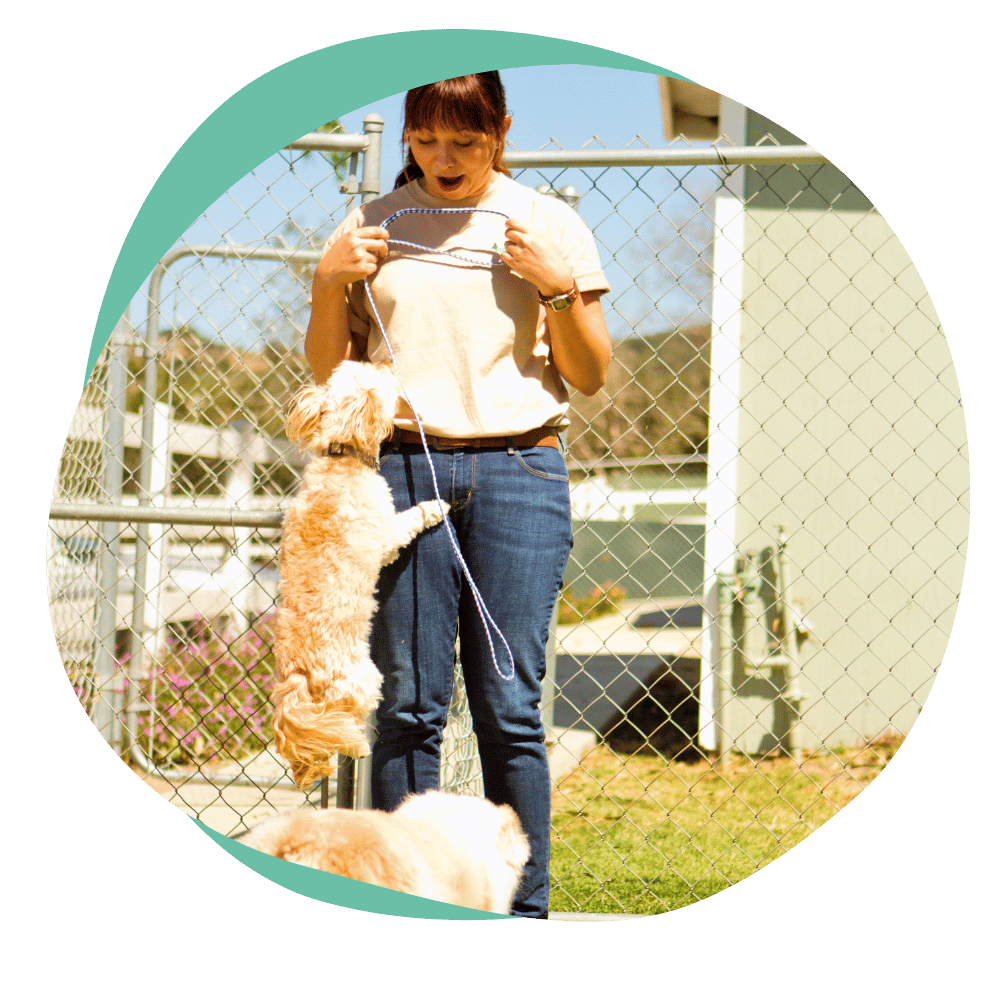
Failing to read early signs of overexcitement is a common mistake that people make when addressing their dog’s jumping on their own. You may have seen this yourself: your dog jumps, then you ask them to sit, then they sit, then you give them attention. What’s likely to happen is what’s called a behavior chain. Your dog learns to jump, then sit, rather than sit immediately to say hello. Not the result you were looking for! A professional trainer will help you avoid these pitfalls and build calm, desirable behavior to prevent jumping before it begins.

Practice Makes Calm Behavior Stick
In the training world, we like to say, “Practice makes permanent.” Every time your dog successfully jumps on someone, they’re more likely to do it in the future. Our job is to set them up for success with a different greeting protocol so that they can practice the way we want them to say hi! This repetition and reinforcement, in real-world situations, is how your dog will learn what you want them to do, no matter who walks through the door.
Training Builds Confidence and Connection
Greeting training isn’t just about greetings. It’s about communication and teamwork. When you and your dog are working together, they start looking to you for guidance and support. This kind of connection builds trust, deepens your bond, and makes everyday life easier, from walks to vet visits to having visitors over at home.
Ready to Stop the Jumping for Good?
If you’re tired of frustrating hellos and ready to enjoy calmer guest arrivals, it might be time to reach out to a trainer. Let us show you how to teach your dog the skills they need to become a confident, well-mannered host. You’ll both be glad you did.
FAQs
How can a trainer help me stop my dog from jumping on guests?
A professional trainer determines why your dog is jumping on guests and then helps you decide how you would like them to greet instead. We teach that new skill in small, achievable steps with lots and lots of repetitions.
Will training help if my dog only jumps when excited?
Yes! Starting training when your dog is feeling calm and collected is the only way to build up to success in those more enthusiastic moments.
Can jumping be fixed in older dogs, too?
Definitely. Dogs never stop learning. While it may take longer to change a long-established habit, it’s still possible.
Why doesn’t ignoring the jumping work for my dog?
Attention is only one reason why dogs jump. If they’re not jumping for attention, then ignoring it will have no impact on their behavior.
How long does it take to train polite greetings?
Every dog is different, but most families see improvements after their first session with Jack and Jill Dog Training.